Nuclear Fusion in Space: Scientists Propose New Energy Solutions for Future Missions
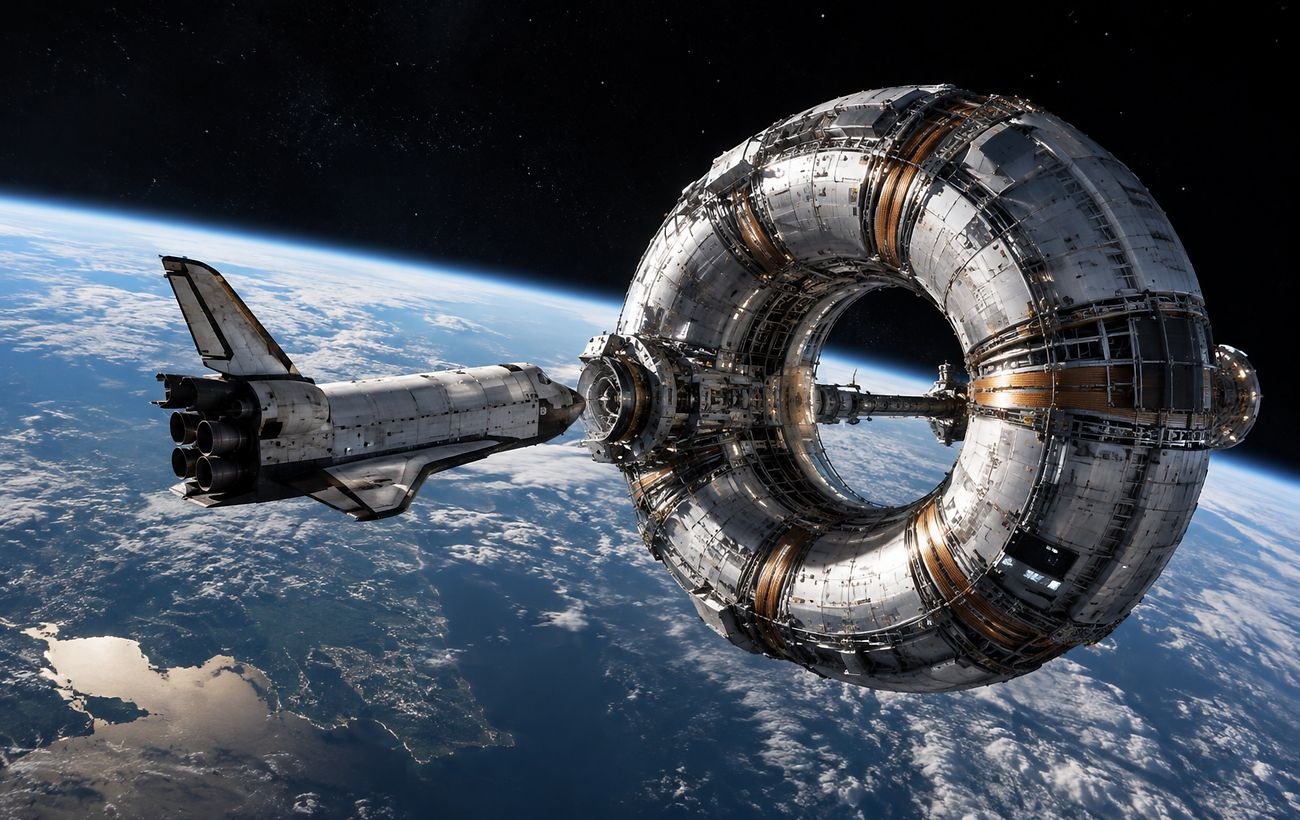
Researchers are exploring the possibility of placing fusion reactors in orbit to overcome the limitations of traditional energy sources in deep space.
 💡Tech
Photo: RBC-Ukraine
Key points
- Placing tokamaks in orbit to power space bases
- Benefits of microgravity and vacuum for fusion reactors
- Alternative to fission reactors
- Potential power output of 1 gigawatt
Prospects for Energy Beyond Earth
The scientific community is seeking alternatives to solar panels and fission reactors to power long-term space missions. According to a study published in ResearchGate, placing fusion reactors in geostationary orbit could be the key to providing stable power for future settlements and industrial facilities in space.
Physicist Yang Bae from the Spacefaring Research Institute proposes two main approaches: using tokamaks—toroidal reactors that contain plasma with magnetic fields—or using laser systems to trigger fusion reactions. While these concepts remain theoretical for now, they offer significant advantages over their terrestrial counterparts.
Advantages of the Space Environment
- Microgravity: reduces mechanical stress on complex reactor structures.
- Vacuum: allows for lighter and more compact chambers without atmospheric pressure resistance.
- Efficient Cooling: open space allows for heat dissipation through specialized radiator panels.
According to the scientist's calculations, a 1-gigawatt tokamak could power approximately one million households or large-scale orbital data centers. This solution appears to be a safer alternative to the fission reactors currently being considered for lunar programs in the US and China, which raise concerns due to radioactive materials.
Source RBC-Ukraine — rbc.ua/ukr/news/termoyaderni-reaktori-hochut-vidpraviti-kosmos-1795… ↗
Read next
 🧠AI Analysis
Exchange Rates for Nov 24: USD and EUR Rise Slightly Amid NBU Stabilization Forecast
The National Bank of Ukraine set official exchange rates for Nov 24, with the US dollar rising to 45.08 UAH and the euro to 49.45 UAH. Financial analysts expect market st…
 🧠AI Analysis
Arctic cold snap heading to Europe with temperatures dropping down to -20°
Central Europe and neighboring regions are bracing for a sharp arctic cold wave, bringing nighttime temperatures down to -20° at the turn of November and December.
 🛡️Security
New Nuclear Blackmail from Moscow: Medvedev Threatens Preemptive Strike
Deputy Chairman of the Russian Security Council Dmitry Medvedev has voiced fresh threats of using nuclear weapons against Ukraine and the West, repeating standard propaga…
 🚨Events
Severe Weather Warning for Ivano-Frankivsk Region: Snow and Ice Expected
Forecasters warn of heavy snow, icy roads, and strong winds in the Ivano-Frankivsk region on November 23-24.
How to Choose Reliable Tactical Gear: Expert Advice for Volunteers and Military Personnel
Experts have outlined key criteria for selecting durable equipment capable of withstanding extreme conditions at the front and during expeditions.
 🏛️Politics
EU summons Russian diplomat over damage to embassies in Kyiv
The European External Action Service has formally protested to the Russian representative following strikes that damaged diplomatic missions in Ukraine.