Global security under pressure: analysts warn of deepening cooperation between authoritarian regimes
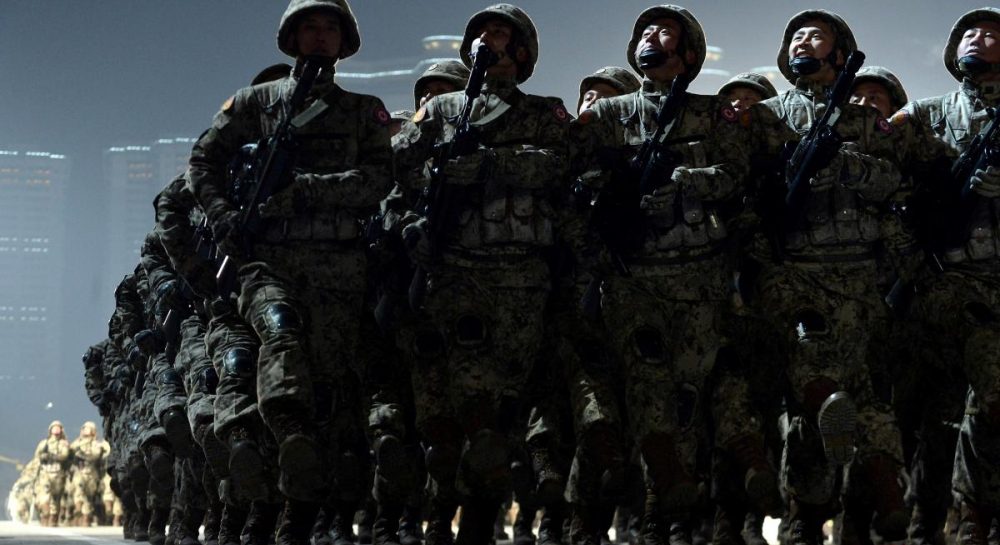
The Economist reports that Russia, China, Iran, and North Korea are forming a real, though informal, alliance that is shifting the global balance of power.
 🏛️Politics
Photo: UNIAN
Key points
- Increased coordination between Russia, China, Iran, and North Korea
- Over 600 security cooperation cases recorded in 2019-2025
- Lack of unified command despite high interaction
- Difficulty for the West in containing the alliance
A new reality in international relations
Authoritarian regimes, including Russia, China, Iran, and North Korea, are demonstrating an increasing level of coordination. According to an analysis by The Economist, this process is no longer just political rhetoric but is evolving into practical cooperation involving the exchange of military technology, intelligence, and combat experience, while simultaneously creating networks to bypass Western sanctions.
Researchers from the US-based FDD center have identified over 600 instances of security-related cooperation between these countries between 2019 and 2025. This interaction has intensified significantly following the start of Russia's full-scale invasion of Ukraine, as joint efforts have increasingly focused on circumventing international restrictions.
Is this a full-fledged military bloc?
Despite the depth of this cooperation, experts note that this alliance differs significantly from NATO. The participants lack a unified command structure or mutual defense commitments. Furthermore, their geopolitical interests sometimes conflict: for instance, China seeks stability in the Middle East, while Russia may benefit from instability to drive up energy prices.
However, even without formal military pacts, mutual support makes these regimes more resilient to external pressure. Western nations are currently facing a challenge where effectively containing each state individually is becoming an increasingly difficult strategy, with no cohesive response currently in place.
Source UNIAN — unian.ua/world/rosiya-knr-iran-ta-pivnichna-koreya-stvorili-neforma… ↗
Read next
Volyn resident celebrates her 101st birthday: the story of a centenarian
Kateryna Vorobey celebrated her 101st birthday in the village of Hraddia, Volyn region. Despite the challenges of her past, she remains relatively independent.
From Boryslav to British Knighthood: The Success Story of Industrialist Michael Sobell
Galicia-born Michael Sobell built a major industrial empire in the United Kingdom and received a knighthood from Queen Elizabeth II. His journey combined innovative marke…
 🧠AI Analysis
Exchange Rates for Nov 24: USD and EUR Rise Slightly Amid NBU Stabilization Forecast
The National Bank of Ukraine set official exchange rates for Nov 24, with the US dollar rising to 45.08 UAH and the euro to 49.45 UAH. Financial analysts expect market st…
 🧠AI Analysis
Arctic cold snap heading to Europe with temperatures dropping down to -20°
Central Europe and neighboring regions are bracing for a sharp arctic cold wave, bringing nighttime temperatures down to -20° at the turn of November and December.
 🛡️Security
New Nuclear Blackmail from Moscow: Medvedev Threatens Preemptive Strike
Deputy Chairman of the Russian Security Council Dmitry Medvedev has voiced fresh threats of using nuclear weapons against Ukraine and the West, repeating standard propaga…
 🚨Events
Severe Weather Warning for Ivano-Frankivsk Region: Snow and Ice Expected
Forecasters warn of heavy snow, icy roads, and strong winds in the Ivano-Frankivsk region on November 23-24.