Eight kilometers that changed history: how archaeology helped solve an ancient astronomical mystery
Researchers from Nagoya University have refined the location of the ancient capital of the Lu state, confirming a 2,700-year-old solar eclipse record.
 🎭Culture & Sport
Photo: UNIAN
Key points
- Refined coordinates for the ancient city of Qufu
- Confirmed the description of the 709 BC solar corona
- Research aids in modeling Earth's rotation
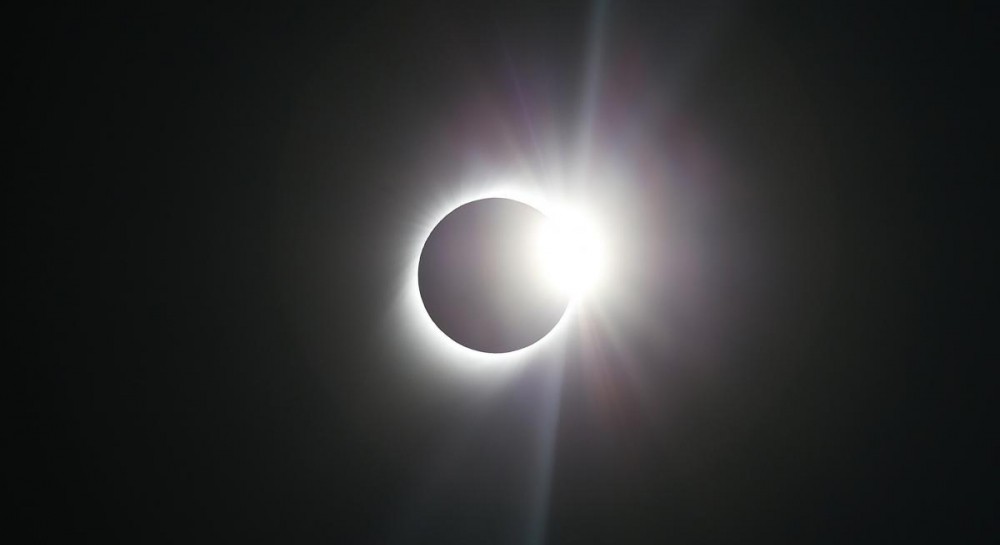
Scientists from Nagoya University have made a breakthrough in studying ancient astronomical records by identifying a long-standing error in calculations. The study focuses on a total solar eclipse recorded in Chinese chronicles on July 17, 709 BC. For years, astronomers struggled to reconcile modern mathematical models with historical descriptions because the calculated path of the eclipse did not pass through the then-capital of the Lu state, Qufu.
The importance of precise coordinates
Archaeological data provided the key to the mystery, revealing that the ancient city was located about eight kilometers away from the site previously assumed to be the center. This seemingly small distance proved decisive: it was from this precise location that observers could have witnessed the total solar eclipse and, potentially, the solar corona.
"In the third year of Duke Huan's reign, during the eclipse, even the center of the Sun grew dark, and a yellowish light shimmered above and below it," the ancient records state.
This discovery not only confirms the reliability of historical chronicles but also helps scientists better understand the dynamics of Earth's rotation. Studying such events allows for the refinement of mathematical models regarding the planet's deceleration, which is critical for modern astrophysics.
Source UNIAN — unian.ua/science/lishe-8-kilometriv-viddilyali-vchenih-vid-rozgadki… ↗
Read next
 🛡️Security
Electricity restored in Rivne region following enemy attack
Energy workers have fully restored power to the Sarny district, where over 50 settlements were left without electricity following the November 20 attack.
 👥Society
Autumn Rose Care: Expert Advice on Pruning Before the Frost
Gardeners in Ivano-Frankivsk are preparing for winter, with experts advising against premature pruning to ensure roses enter dormancy safely.
 🛡️Security
Estonia supports Ukraine's right to self-defense following incident in the Gulf of Finland
Estonian Foreign Minister Margus Tsahkna stated that the strike on a Russian vessel is a consequence of Russia's aggressive war, affirming Ukraine's right to defend itsel…
 🛡️Security
89-year-old woman rescued from rubble of destroyed building in Dymer
Emergency services continue clearing debris in Dymer after a drone strike destroyed a residential building. The death toll has risen to nine.
 🛡️Security
Russian corvette 'Mercury' reportedly hit by Ukrainian drones in Libya
A Russian naval vessel sustained damage following an explosion in Benghazi, with reports suggesting the involvement of Ukrainian maritime drones.
 🛡️Security
Russia tests NATO defense algorithms through airspace violations, says Dmytro Kashchenko
Military expert Dmytro Kashchenko stated that Russia uses incidents involving missiles and UAVs entering Alliance airspace to test the readiness of NATO defense systems.