Why Manhole Covers Are Round: A Simple Engineering Explanation
The mathematical and practical reasons why municipal services and engineers choose round shapes for manhole covers.
 🏙️City
Photo: UNIAN
Key points
- Round covers cannot physically drop into their own openings due to geometry.
- Circular lids are easier to move by rolling them along the ground.
- Traffic loads are distributed evenly across the entire surface.
- Installation is faster since no specific corner alignment is required.
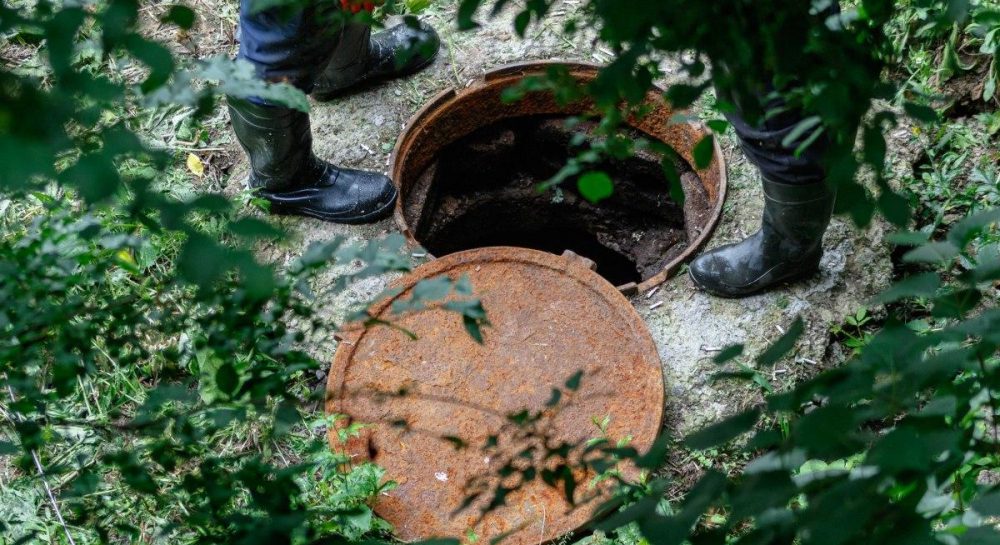
Walking along city streets, residents frequently pass manhole covers without giving much thought to their design. However, the familiar round shape of these urban utility elements is not a matter of aesthetics, but rather the result of strict mathematical principles and practical safety requirements.
Geometric Safety and Logistics
The primary advantage of a circle is that it is the only geometric shape that cannot fall through its own opening. Unlike square or triangular covers, a round lid's diameter remains consistent regardless of its orientation. If a square plate is turned diagonally, it can easily slip down into the shaft, creating a severe hazard for vehicles and pedestrians.
Beyond safety, round heavy-duty covers are much easier to transport during infrastructure maintenance. Instead of lifting heavy cast-iron pieces manually, workers can simply roll them along the ground, significantly reducing physical strain and speeding up operations.
Even Load Distribution
As mathematics educators point out, a circle is the only geometric figure that cannot drop down into its own aperture.
Another crucial factor is durability under heavy traffic conditions. Due to the circular geometry, the immense pressure from passing vehicles and surrounding soil is distributed evenly across the entire perimeter, preventing stress concentration in specific corners or points.
In practice, this also simplifies installation for municipal crews. Because round lids lack a fixed orientation, workers do not need to waste time aligning specific corners or sides when placing the cover back after inspecting underground utility networks.
Source UNIAN — unian.ua/curiosities/chomu-krishki-lyukiv-krugli-vsya-sprava-v-geom… ↗
Read next
 🛡️Security
Healthcare Infrastructure Restoration in Chernihiv Region: Progress Update
More than half of the healthcare facilities damaged by Russian shelling in the Chernihiv region have been restored. Efforts are now focused on energy resilience and menta…
 🛡️Security
EU to allocate €1 billion for military procurement for the Armed Forces of Ukraine
The European Union has allocated an additional €1 billion through the European Peace Facility to strengthen Ukraine's defense capabilities. The funds will be used for the…
 🇺🇦Ukraine
EU spent more on Russian energy than on aid to Ukraine
According to the European Commission, total payments from EU member states for Russian energy since 2022 have exceeded the volume of financial support provided to Ukraine…
 🛡️Security
Russian army attacks civilian infrastructure in Zaporizhzhia: kindergarten damaged
A Russian strike on Zaporizhzhia has resulted in damage to a kindergarten and a fire in an adjacent residential building.
 💡Tech
Environmental Diplomacy: Ukraine Blocks Russian Climate Report at COP31 Over Occupied Territories Data
The Ukrainian delegation at the Antalya conference successfully challenged a Russian report that included falsified data from occupied Ukrainian regions.
 🛡️Security
Missile strike on Kryvyi Rih: casualties and dozens injured
Russian forces launched a ballistic missile attack on the center of Kryvyi Rih, resulting in fatalities, including a child, and dozens of injuries.